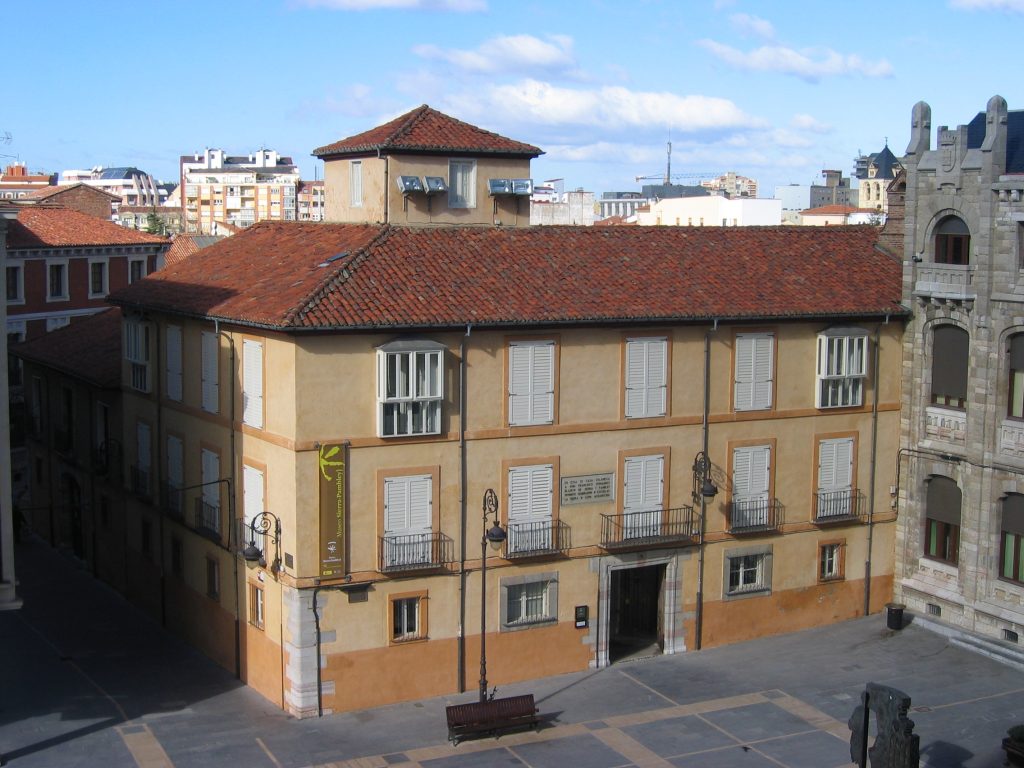
The Sierra Pambley Museum opened in 2006 with a dual objective: on the one hand, to portray the domestic life of an enlightened 19th-century bourgeois family, and on the other, to showcase the educational work promoted by the Sierra Pambley Foundation—an institution established by a member of that family.
Visitors can explore the family home, whose rooms reveal their original uses, who lived there, and how they spent their days within its walls. Located in León’s cathedral square, the house was built by Segundo Sierra Pambley in the 1840s. It retains all the furnishings and equipment with which it was furnished: from the striking wallpapers and carpets, which were a novelty at the time, to the furniture, fabrics, and tableware.
Its decoration reflects the early introduction of European fashions, particularly English and French, into Spain. It is a harmonious and complete ensemble, deliberately modern for its time, and also showcases the innovations brought about by industrialization in bourgeois homes, such as improvements in lighting and heating systems.
On the other hand, visitors can explore (on the museum’s entrance level) the “Cossío Room,” dedicated to the educational work of the Sierra Pambley Foundation. Francisco Fernández Blanco y Sierra Pambley decided to dedicate his assets to the creation of this institution in 1887. From it, five schools were established, linked to the Institución Libre de Enseñanza (Free Institution of Teaching) in Madrid. These schools were geared towards the education of peasants and workers and were notable for their adaptation to the resources and socioeconomic characteristics of each area. Four were located in the province of León: Villablino, Hospital de Órbigo, León, and Villameca; the fifth was in the province of Zamora, in Moreruela de Tábara.